Therapy for women who lose themselves in relationships
You might understand your relationship patterns perfectly well and still find yourself repeating them when it matters most. I offer a space to explore why insight alone hasn't been enough to change how you relate, and what lies beneath the patterns that keep pulling you away from yourself.
For women who are thoughtful, self-aware and completely frustrated by their own patterns.

When your relationships leave you feeling smaller
You're capable, reflective and often very clear about yourself when you're on your own. But in dating and relationships, something shifts.
You find yourself taking responsibility for things that aren't yours to carry, or questioning needs and instincts you would ordinarily trust. You may recognise the pattern as it's happening, yet struggle to understand why that recognition doesn't seem to change anything.
Perhaps you've spent years trying to make sense of it, through conversations with friends, reading about attachment theory or previous therapy.
Many of the women I work with arrive already blaming themselves for repeating these patterns, telling me, "I'm the common denominator." But rather than treating this as evidence that something is wrong with you, we can look more carefully at the relational dynamics involved: what draws you into familiar roles, what makes them difficult to leave, and what might be keeping them in place.
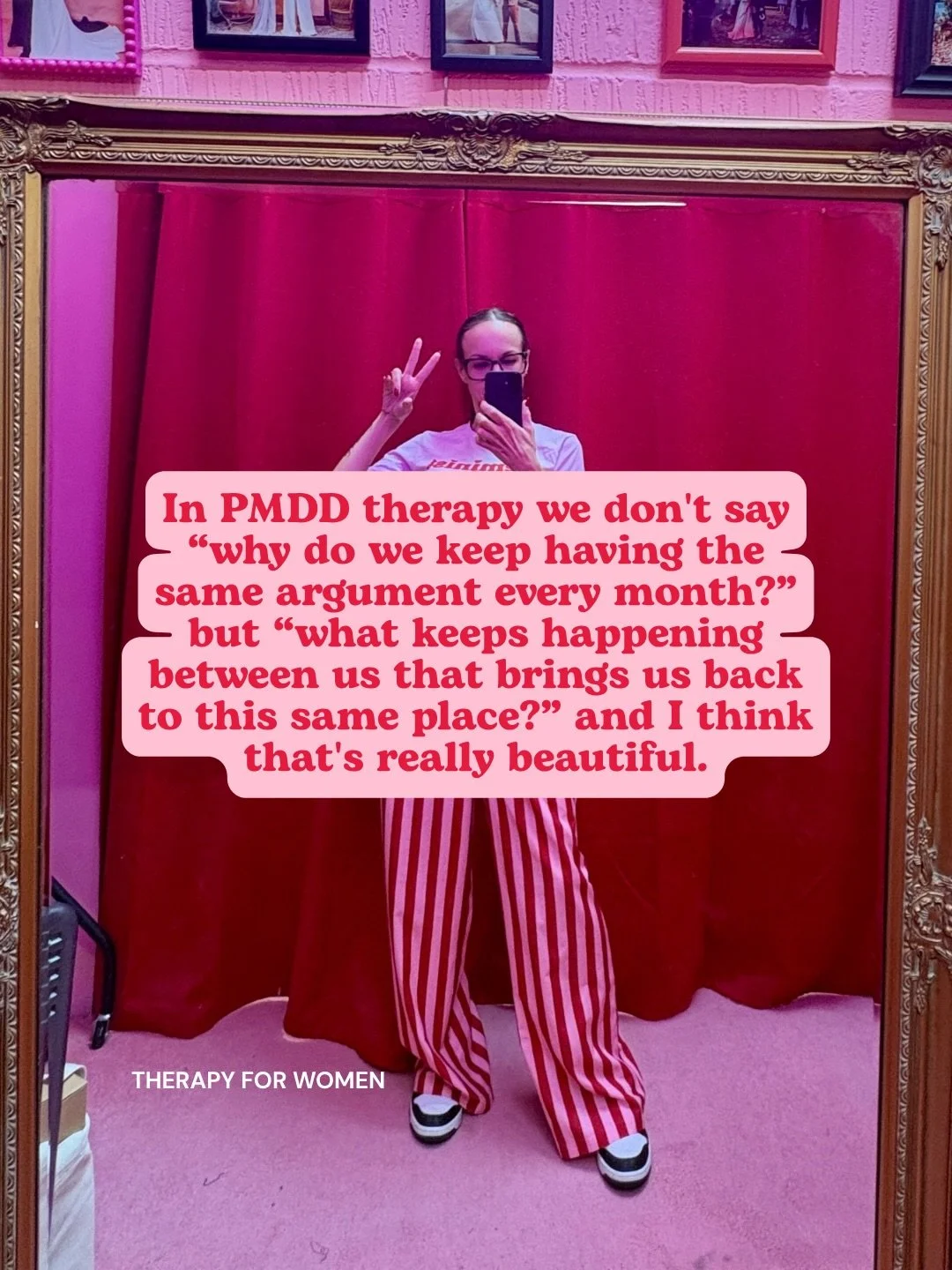
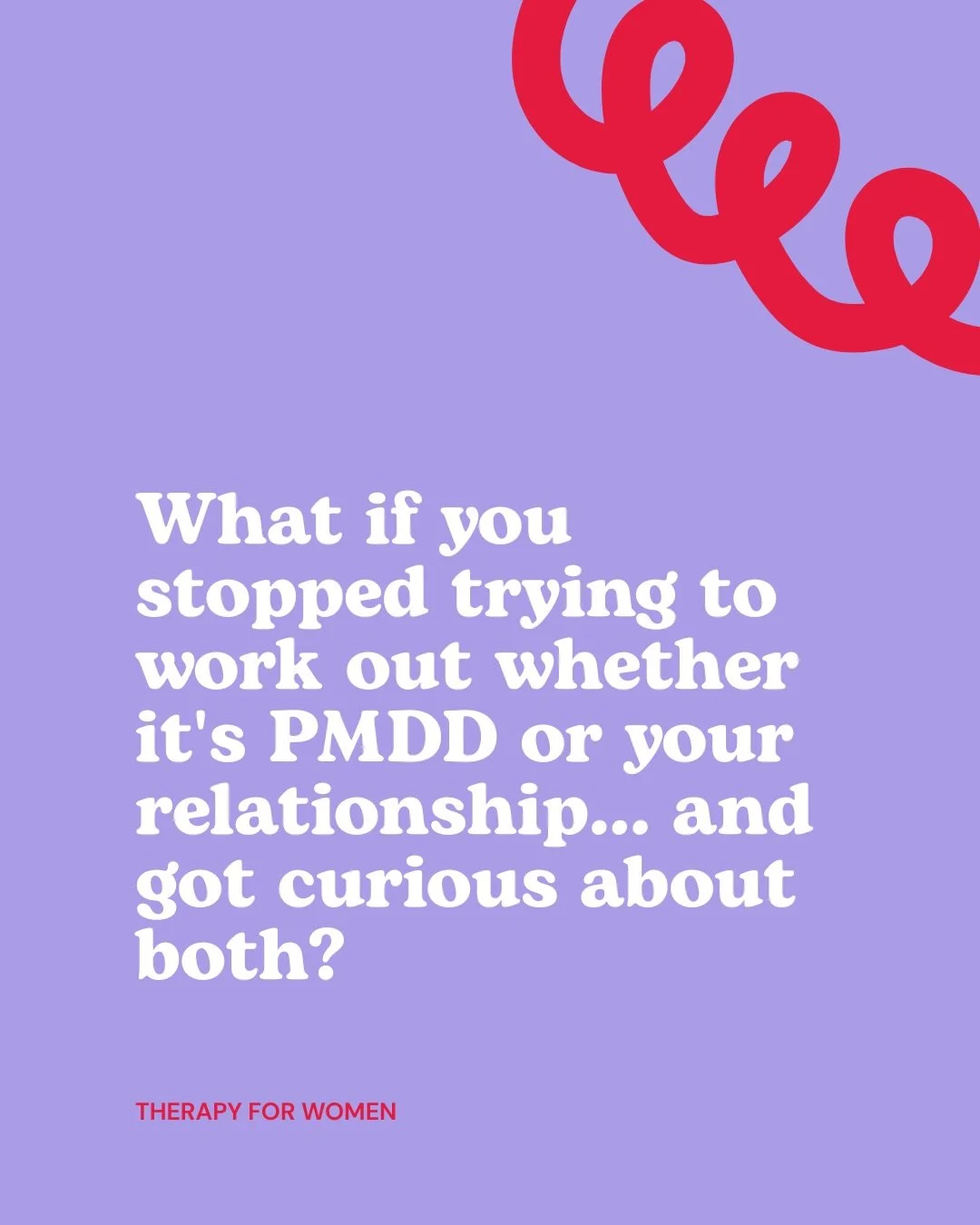
If PMDD is affecting your relationships, your sense of identity or your trust in your own mind each month, there may be more to explore than the symptoms themselves. My work focuses on the psychological and relational impact of PMDD, including how cyclical changes can affect your experience of yourself, your relationships and your sense of who you are.
Specialist therapy for PMDD


About me
I'm a relational psychotherapist, FdSc-qualified and registered with the National Counselling and Psychotherapy Society. I've been that woman, the one who could see the pattern coming but couldn't stop it. I've done the work. I still do the work.
I'm a sweary feminist who believes women have been sold a lie about love, autonomy and what it means to take up space. My work is sex-positive, culturally inclusive and grounded in the belief that you need space to unlearn the shit that's been keeping you small.
I don't care for therapy-speak or Instagram psychology. I do depth, nuance and real fucking conversations about why you keep losing yourself.

What clients have taken from our work
"You truly are an amazing counsellor. You helped me along and kept my anxiety at bay so thank you for all you've done for me."
“Just want to thank you, Aimee, for the work we did together. I found it really beneficial, you were amazing with me and I never missed one session. I found out so much about myself and I have definitely grown as a person.”
“Thank you, Aimee, for always listening to me and helping me to understand my feelings are valid. You have been so supportive, I am very grateful for the counselling that I received.”


FAQs
-
Because insight alone doesn't change them. You can know exactly what you're doing, see the pattern coming from a mile off and still find yourself back in the same place. That's not a failure of willpower or self-awareness. It's because these patterns were formed in your earliest relationships, long before you had language for them, and they live in the body and in the unconscious, not in the thinking mind. That's why reading about them doesn't shift them. The work that does is slower, more relational, and goes underneath.
-
On some level, it makes sense… Maybe not consciously, but underneath. What we're drawn to in relationships is rarely random. It's shaped by early experiences of love, others’ availability and what you learned to expect from the people who mattered most. When someone being unavailable feels familiar, it can register (outside of your awareness) to you as chemistry. Therapy isn't about making better choices through willpower. It's about understanding what's driving the choice in the first place, so something can actually shift.
-
If you'd like to explore working together, you'll start by completing my enquiry form. I'll ask you to share a little about what's bringing you to therapy and what you're looking for.
I'll review your enquiry and, if I feel I can offer the support you're looking for and have availability, I'll be in touch to arrange your first session.
I don't offer a separate introductory call. Instead, your first appointment is a full 50-minute therapy session, giving us the time and space to begin exploring what's bringing you to therapy properly.
From there, we'll think together about whether ongoing therapy feels appropriate.
-
As an integrative therapist, I draw on different approaches to create a warm, reflective space where it's possible to work through your issues. I believe you're the expert on your own life, so our work isn't about me giving advice or finding solutions for you; it's about enabling you to find your own way forward.
In our sessions, you can expect:
A calm, supportive space where your feelings and needs are genuinely respected
A pace that honours your emotional safety (no pushing or rushing)
Encouragement to practise more self-compassion. If that sounds tricky, don't worry, you can borrow some of mine while you get the hang of it
Space for silence if that's what you need, a few swear words if that helps, and laughter when it feels right
Full permission to show up exactly as you are
Honest, respectful attunement. And if I ever get it wrong, you'll receive a genuine, non-defensive repair
-
My rate is currently £70/session.
-
Sessions are largely confidential, with a few exceptions:
If I assess you to be at risk of harm to yourself or others
If I assess that you are involved in or have information about others involved in significant criminal activity e.g., terrorism, breach of prison security
In medical emergencies
To fulfil legal requirements (e.g. courts, the police)
I share some contextual details of our therapeutic relationship with my supervisor, who is bound by the same ethical agreement as me, and they don’t know anything that would make you personally identifiable. My supervisor keeps brief supervision notes and knows only your first name. Only under the circumstances above will confidentiality be broken.
-
Perhaps. If it is important to you, then quite possibly. Self-disclosure is delicate in therapy, but I understand the desire to know more about the person you are sharing your life story with!
As a general rule, I like to consider why it matters to you, and whether it is helpful to you.
-
I have a Foundation degree (FdSc) in Integrative Counselling which was highly focused on ethical practice. I am an Accredited Registrant of the National Counselling and Psychotherapy Society (NCPS), whose register is recognised by the Professional Standards Authority to ensure the public can choose safe, ethical and competent professionals when looking for support. I abide by their Code of Ethics, and I undertake regular training and CPD to keep in touch with developments. I have full professional indemnity insurance, a DBS check and maximum-security clearance for the criminal justice system from my work in prisons.
-
Honestly, you don’t yet, and neither do I. Building a therapeutic relationship takes time, but I know it’s not easy to start sharing personal things about yourself as soon as you meet someone.
While some therapists offer a free intro call, I personally don’t believe that is long enough for us to get a feel for one another. So I use an initial session as a chance for us to actually get to know one another. Then, you might leave thinking “that's exactly what I’m looking for", which can be a sign that we’re a good fit. And hey, if it doesn’t feel absolutely right for you, then that’s OK too, and very much a part of the process.
I work best with people who want to understand themselves more deeply, exploring why they feel the way they do and making sense of repeating patterns rather than focusing only on quick fixes and coping techniques.
If you’re looking for someone who will sit with you in the mud while also gently challenging you and celebrating little wins when things start to shift, then I could well be the person for you.
Enquire about therapy
If you're wondering whether therapy with me might be right for you, get in touch. You don't need to have everything figured out before you enquire. Tell me a little about what's bringing you to therapy and what you're hoping might change.
I'll review your enquiry and, if I have availability and feel I can offer the support you're looking for, I'll be in touch to arrange your first appointment. This will be a full 50-minute therapy session, rather than a separate introductory consultation.

If you're not ready to book yet…
Thoughts on relationships, patterns, identity and why you keep ending up in the same place. No wellness clichés, no soft-focus advice. Just honest, psychologically informed writing for women who are done with surface-level answers.